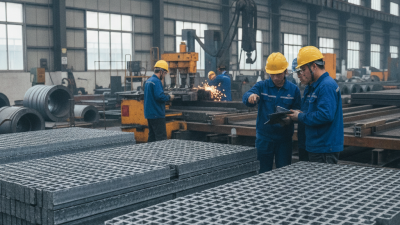
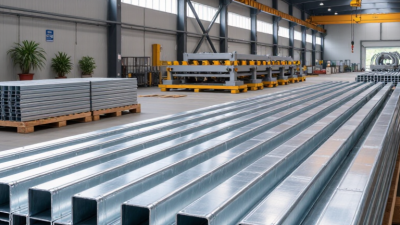
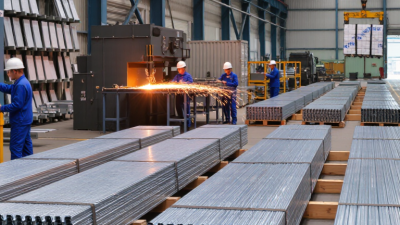
Choosing a supplier for Low Carbon Steel Grating is about more than comparing prices. Buyers also need to assess material consistency, fabrication quality, documented carbon data, and delivery reliability. A neat brochure is not proof. Ask for mill certificates, product specifications, and clear explanations of how emissions figures were calculated.
Edwin Basson, Director General of worldsteel, has often emphasized steel’s recyclability. The following is a paraphrase of that principle, not a verbatim quotation: “Steel can return to use again and again, but its production footprint still matters.” That distinction matters. Recycled content alone does not show a product’s full environmental impact. Buyers should check what each supplier measures and whether the evidence applies to the offered grating.
This guide presents ten suppliers for global buyers to investigate, rather than declaring a universal winner. It considers product range, technical information, export experience, customization, and sustainability transparency. A panel’s load requirements, bearing-bar spacing, surface finish, and site conditions can all affect the right choice. Details matter.
Supplier data may be incomplete or difficult to compare. That is worth acknowledging. Before requesting a quotation, prepare drawings, dimensions, expected loads, finish requirements, and delivery location. Then ask each shortlisted supplier the same questions. Consistent answers make comparison fairer, even when the final choice is not obvious.

Low carbon steel grating uses steel with relatively low carbon content, typically chosen for its balance of strength, formability, and weldability. This meaning differs from “low-carbon” steel in climate discussions, which refers to reduced greenhouse gas emissions during production. Buyers should check both the material specification and the mill’s emissions data. The distinction matters.
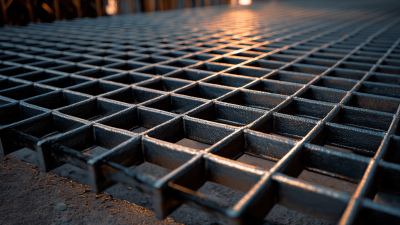
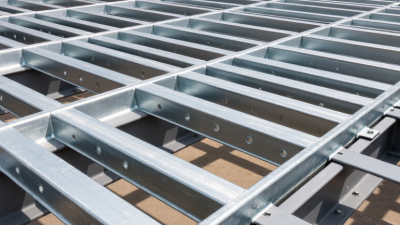
Open steel grating consists of load-bearing bars joined by crossbars, leaving spaces that help water, light, and debris pass through. It is common on walkways, drainage covers, platforms, and stair treads. In a wet plant, that open pattern can reduce standing water, but it does not remove the need to assess corrosion protection, bar spacing, and rated loads. Details matter.
The International Energy Agency’s Iron and Steel Technology Roadmap reports that steelmaking produced about 2.6 gigatonnes of direct CO2 emissions in 2019, roughly 7% of global energy-system emissions. Meanwhile, World Steel Association data puts 2023 crude steel production at about 1.89 billion tonnes. These figures show why material sourcing deserves attention, though they do not measure grating-specific impacts. Ask suppliers for product weights, steel grades, coating details, and verifiable emissions information. A low-carbon alloy designation alone is not proof of a lower production footprint. Even careful comparisons can be imperfect.
Low-carbon steel’s composition supports the forming and welding processes commonly used to manufacture steel grating for walkways, platforms, and drainage covers. The chart shows carbon-content limits for selected SAE grades; actual requirements depend on the applicable product specification.
Reference: SAE J403. Carbon content is shown as a percentage by weight.
A dependable low carbon steel grating supplier should be able to explain how its products fit your project, not just send a price sheet. Ask for the steel grade, bar dimensions, bearing-bar spacing, and cross-bar spacing in writing. Compare these details with your drawings and expected loads. Request recent material test documents and welding or coating specifications where applicable. For galvanized grating, confirm the coating process and agreed thickness; a bright surface alone does not prove durability. Ask for a sample if finish or fit matters. Check the edges.
Tips: Send one clear drawing and a written load requirement to each supplier. Compare the same specifications, delivery terms, and packaging details. Ask who checks dimensions before shipment.
A strong supplier can describe its inspection steps and explain how it handles out-of-tolerance pieces. Request photographs of packed orders, especially if panels need protection from moisture or impact during transport. Discuss production lead time, order quantities, and how changes are recorded. References from similar applications can add useful context, but verify that the examples match your conditions. One point is easy to miss: a low price may reflect a different bar spacing or coating scope. I would not treat a polished quotation as proof of consistent quality; confirm the details before committing.
A practical, non-ranked checklist for comparing suppliers. The standards and examples below are reference points; confirm the applicable requirements for your project, destination market, and design.
| No. | Evaluation Dimension | What to Request | How to Assess It | Buyer’s Check |
|---|---|---|---|---|
| 01 | Material grade and traceability | Steel grade, material test certificates, heat or batch identification, and traceability records. | Check that the offered grade matches the project specification. Common structural-steel references include ASTM A36 and EN 10025-2 S235JR; they are not automatically interchangeable. | Confirm the grade, certificate type, and traceability requirements in the purchase specification. |
| 02 | Load design and technical support | Load tables or calculations based on the specified panel size, bearing-bar direction, span, support conditions, and load type. | Check that the design data corresponds to your actual installation. A load value without its assumptions is not enough to verify suitability. | Have the project’s responsible engineer review the design and stated deflection criteria. |
| 03 | Product range and configuration | Available bearing-bar and cross-bar arrangements, panel sizes, mesh spacing, banding, cut-outs, and fastening options. | Compare the proposed drawings and bill of materials with the project layout, including openings and edge details. | Approve dimensioned shop drawings before production. |
| 04 | Manufacturing quality | Production process description, inspection plan, dimensional checks, and sample or production photographs. | Review consistency of bar alignment, welds or connections, panel squareness, edge finish, and workmanship against the agreed specification. | Define acceptance criteria and inspection points in the contract. |
| 05 | Corrosion protection | Coating type, preparation method, coating specification, inspection records, and repair procedure for damaged areas. | For hot-dip galvanizing, clarify the specified standard and coating requirements. ASTM A123/A123M and ISO 1461 are commonly referenced standards for zinc coatings on iron and steel products. | Confirm the applicable standard, exposure environment, and inspection method with the project team. |
| 06 | Slip resistance and service conditions | Surface style, edge details, and available test information relevant to the intended use. | Assess the surface against the actual conditions, such as wet, oily, outdoor, or pedestrian use. Do not treat a product description alone as proof of a required slip rating. | Specify any required test method or performance rating before ordering. |
| 07 | Quality management and compliance | Current quality-system certificates, certificate scope, product documentation, and destination-market compliance documents where applicable. | Verify certificates with the issuing body and check that the named legal entity, scope, and validity period cover the work being offered. | Identify the regulations and documentation required for the installation location. |
| 08 | Inspection and testing | Inspection and test plan, dimensional reports, material records, coating inspection results, and agreed third-party inspection options. | Check that reports identify the order or batch and record results against defined acceptance criteria. | Agree who inspects, when inspection occurs, and who bears the associated cost. |
| 09 | Export packing and delivery | Packing method, bundle identification, shipping marks, estimated production lead time, and proposed delivery terms. | Assess whether packaging protects panels and coatings during handling and transport, and whether the supplier can provide the required shipping documents. | Confirm Incoterms, delivery schedule, packaging requirements, and responsibility for unloading. |
| 10 | Quotation clarity and after-sales support | Itemized quotation, exclusions, payment terms, warranty terms, drawing revision process, and contact for technical or quality issues. | Compare like-for-like scope, including material, finish, accessories, packing, inspection, and freight—not just unit price. | Resolve deviations and obtain written confirmation of the final scope before placing the order. |
Note: This table is an evaluation framework, not a ranked list or verification of specific suppliers. Confirm technical suitability, current certificates, and applicable standards directly with each supplier and your project engineer.
Low carbon steel grating suppliers differ in capacity, fabrication methods, and export experience. An integrated mill may suit buyers needing steady, high-volume panels. A regional fabricator can offer closer coordination on custom dimensions. An export-focused supplier may handle packing and shipping documentation. A galvanizing specialist can provide coating options for outdoor use. A welded-grating producer may be a practical choice for standard industrial walkways.
A press-locked grating supplier can serve projects requiring a clean, uniform appearance. A stair-tread maker focuses on nosing details and fit. An engineering-led workshop may help interpret drawings, though revisions can take time. A stock-size distributor can support urgent replacements, subject to inventory checks. A small-batch fabricator may accommodate unusual panel shapes, but confirm its load-testing process. These are supplier profiles, not guarantees; verify actual capabilities before ordering.
Tips: Request a sample, material certificate, load data, and coating specification. Compare the drawing with the quote line by line. Details matter. Ask how panels are packed, since bent edges can complicate installation.
When comparing low carbon steel grating suppliers, look beyond product photos. Ask for load tables, bearing-bar dimensions, cross-bar spacing, and coating details. A sample panel can reveal uneven welds or sharp edges. Small details matter.
Certifications should match the work being purchased. Request current quality documents, material test reports, and traceable batch records. Then check that the document scope covers the actual factory and product. A certificate alone cannot confirm consistent workmanship. That part needs verification.
Export capability is practical, not just a list of destination countries. Ask about export packing, port handling, shipment schedules, and document preparation. For example, grating bundles should be secured against shifting and moisture during transit. Compare quoted lead times with recent shipping experience, where available. I would not choose from a polished catalog alone; it is an easy shortcut, but a weak one. Supplier replies can also be imperfect. A delayed answer may signal workload, though it does not prove poor production. Weigh evidence together: technical clarity, inspection access, reliable records, and realistic delivery commitments.
International sourcing starts with a specification that leaves little room for interpretation. State the steel grade, bearing-bar depth and thickness, cross-bar spacing, panel dimensions, load class, and surface treatment. A small mismatch can complicate installation: a panel may fit the opening but fail to align with its supports. Request drawings, inspection records, and mill test certificates before production, not after shipment.
Low-carbon claims also need comparable evidence. The International Energy Agency’s 2023 steel-sector analysis estimates that steelmaking produced about 2.6 gigatonnes of direct CO₂ emissions in 2022, roughly 7% of global emissions. Ask suppliers for product-level emissions data, its calculation boundary, and supporting environmental declarations. “Low carbon” alone is not a usable procurement metric. Details matter. A declared footprint may exclude transport or finishing, so compare like with like.
Check coating requirements against the project environment, and confirm the applicable standard, inspection method, and coating thickness in writing. For hot-dip galvanized grating, ask how cut edges and welds are handled. Review lead times, export packaging, spare-panel availability, and Incoterms alongside price. The World Steel Association reported global crude steel production of about 1.89 billion tonnes in 2023; that scale does not guarantee consistent quality from an individual supplier. A checklist helps, but it cannot replace reviewing a sample panel and resolving unclear tolerances.