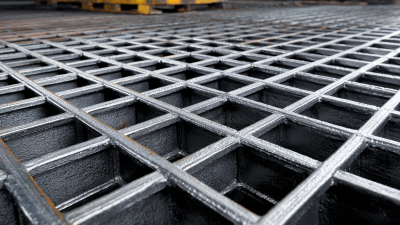
Best Galvanized Steel Bar Grating Manufacturer in China

Choosing the Best Galvanized Steel Bar Grating Manufacturer in China requires more than comparing prices. It demands evidence.

The World Steel Association reported approximately 1.89 billion tonnes of global crude steel production in 2023. That scale highlights steel’s industrial importance, but it does not guarantee product quality. A reliable manufacturer should provide traceable steel grades, welding records, dimensional inspection reports, and hot-dip galvanizing certificates. ASTM A123 and ISO 1461 offer practical benchmarks for coating quality, appearance, and thickness. These standards help buyers evaluate whether grating can withstand wet floors, chemical exposure, loading traffic, and outdoor weather.

Corrosion protection matters.

The American Galvanizers Association explains that coating life depends strongly on zinc thickness and the surrounding atmosphere. Rural, urban, marine, and industrial environments produce very different results. Dr. Gregory Zhang of the International Zinc Association describes zinc as “a natural, essential and sustainable element.” His observation supports the material’s value, but it should not replace project-specific engineering.

The right manufacturer should calculate load capacity, bearing-bar size, surface treatment, panel dimensions, and installation tolerances. It should also explain whether serrated surfaces, stair treads, or custom cutouts are suitable. Factory photographs are useful, though they are not proof. Independent inspections are stronger.

A perfect supplier does not exist.

Even experienced factories can make mistakes during cutting, welding, or packing. Buyers should therefore review samples, verify certificates, and inspect finished panels before shipment. This guide examines Chinese manufacturers through technical capability, production experience, quality systems, export reliability, and after-sales support. The goal is practical judgment, not exaggerated promises.
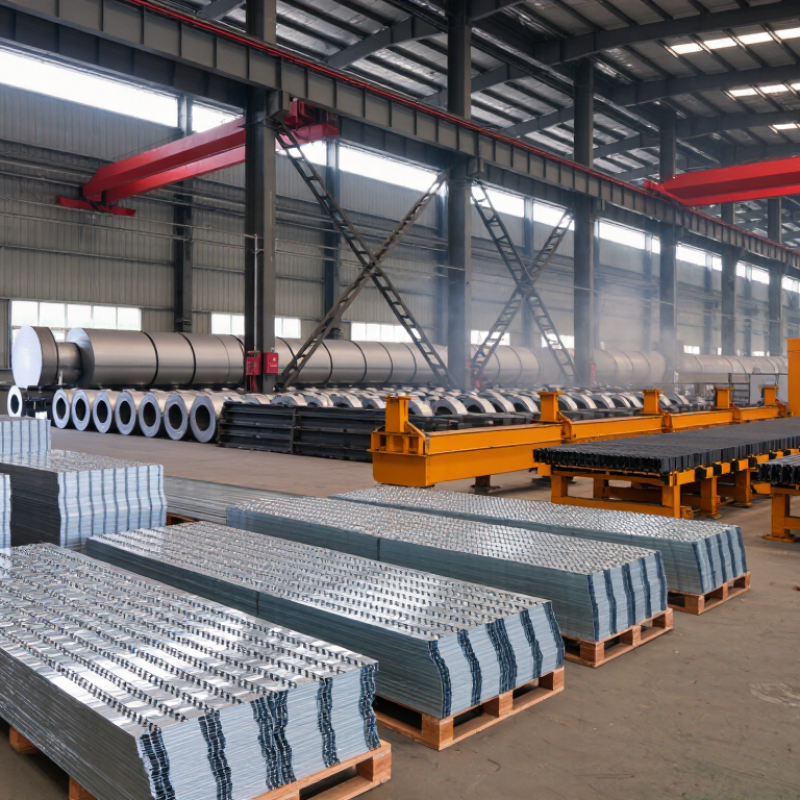
Best Galvanized Steel Bar Grating Manufacturer in China

What Galvanized Steel Bar Grating Is and How It Works

Galvanized steel bar grating is a load-bearing floor panel made from parallel steel bars and perpendicular cross bars.

The bearing bars carry weight. Cross bars hold spacing and improve panel stability. Its open surface lets rainwater, oil, light, and air pass through. That matters on platforms, walkways, drainage covers, and industrial stairs.

Hot-dip galvanizing bonds zinc to the steel surface. Zinc protects exposed steel through a barrier layer and sacrificial action. ISO 1461 specifies an average coating thickness of 85 micrometres for steel over 6 millimetres thick. The American Galvanizers Association reports atmospheric service lives exceeding 50 years in many industrial environments, though severe coastal exposure can reduce durability.

These figures are useful, not universal promises. Local pollution, standing water, and damaged edges still matter.

A reliable Chinese manufacturer should verify bearing-bar dimensions, weld penetration, panel flatness, and zinc thickness. Load tables must match span, support conditions, and walking traffic. A heavier panel is not automatically safer.

Poor spacing can create uncomfortable foot contact, while excessive open area may drop small tools. Inspectors should check cut edges and repaired coating areas before installation. I would also request mill certificates, galvanizing records, and sample load-test results.

Coating appearance alone proves very little; that is an easy mistake to make.
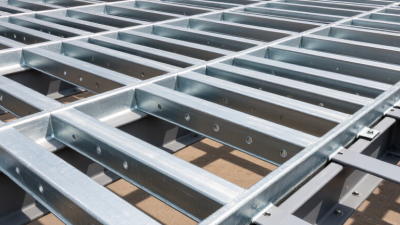
Key Features of a Reliable Chinese Bar Grating Manufacturer

Choosing the best galvanized steel bar grating manufacturer in China requires more than comparing prices. A reliable supplier shows practical experience through clear drawings, load tables, and project records. Their engineers should understand bearing bars, cross bars, span direction, and surface treatment. Small details matter. For example, a factory should confirm whether panels need serrated surfaces, banded edges, or removable clips before production. This prevents expensive site adjustments.

Professional control begins with material verification. Reputable manufacturers can provide steel grade records, zinc coating data, welding inspection results, and dimensional reports. Each batch should be traceable from raw material to packing. Galvanizing must cover cut edges and weld areas evenly, especially on platforms exposed to rain and industrial moisture. I would also request a sample panel. It reveals flatness, weld consistency, burrs, and handling quality better than photographs. Packaging deserves attention too. Reinforced bundles, labels, and lifting points reduce damage during shipment.

Reliable communication is another key feature. The supplier should answer technical questions directly and flag unclear drawings before fabrication. They should explain tolerances instead of promising perfection. No factory is flawless. A rushed revision can still create a mismatch between stair treads and supporting steelwork. That is why approval drawings, inspection checkpoints, and independent checks remain valuable. Experienced teams also adapt panel sizes, fixing methods, and delivery documents to local installation practices. Their authority comes from repeatable evidence, not polished claims. Ask for measurable proof.

Best Galvanized Steel Bar Grating Manufacturer in China - Key Features of a Reliable Chinese Bar Grating Manufacturer

Evaluation Dimension Reliable Manufacturer Benchmark Technical Reference or Verification Method
Applicable Product Standards Manufacturing and inspection requirements are clearly matched to the project specification. Common references include ANSI/NAAMM MBG 531 for metal bar grating and relevant national or project standards.
Steel Material Selection Bearing bars and cross bars are produced from traceable structural steel grades suitable for the specified load. Typical grades include ASTM A36 or A572 and EN 10025 grades such as S235, S275, or S355, subject to design requirements.
Bearing Bar Configuration Bearing bar height, thickness, span, and spacing are selected according to the required uniform and concentrated loads. Frequently specified bearing bar sizes include 25 × 3 mm, 30 × 5 mm, and 40 × 5 mm; final selection requires engineering verification.
Panel Spacing The supplier offers standard and project-specific bearing bar and cross bar spacing. Common spacing combinations include 30/100 mm and 30/30 mm, where the first value normally indicates bearing bar spacing and the second indicates cross bar spacing.
Manufacturing Method Pressure-welded or swage-locked construction is selected according to load, appearance, drainage, and application requirements. Pressure-welded grating uses welded cross bars; swage-locked grating mechanically locks twisted cross bars into the bearing bars.
Galvanizing Process Hot-dip galvanizing is applied after fabrication when full coverage of cut edges, welds, and recessed areas is required. ISO 1461 specifies minimum zinc coating requirements for fabricated iron and steel articles; coating thickness depends on the steel thickness.
Typical Zinc Coating Reference The manufacturer provides coating inspection records and confirms the applicable standard before production. Under ISO 1461, the minimum mean coating thickness is commonly 85 μm for steel over 6 mm thick, 70 μm for steel over 3 mm up to 6 mm, and 55 μm for steel from 1.5 mm up to 3 mm.
Load and Deflection Control Load tables or project calculations are supplied for the actual span, bearing bar size, spacing, and support condition. A reliable supplier should not use a single generic load value for every panel; structural capacity must be checked for each application.
Surface and Safety Options Plain, serrated, stair tread, trench cover, and anti-slip configurations are available where appropriate. Serrated bearing bars can improve slip resistance, especially in wet, oily, or outdoor service conditions.
Dimensional Accuracy Finished panels are checked for length, width, squareness, bearing bar alignment, weld quality, and opening dimensions. Inspection should be performed against approved drawings, purchase specifications, and applicable grating tolerances.
Weld Quality Welds are continuous and secure, with no visible cracking, excessive spatter, incomplete fusion, or loose cross bars. Visual inspection and, when required, additional testing should be defined in the quality plan.
Traceability and Documentation Material certificates, galvanizing records, inspection reports, packing lists, and dimensional drawings are available. Documents should identify the production batch, material grade, dimensions, quantity, coating requirement, and inspection results.
Packaging and Export Protection Panels are securely bundled, protected from deformation, and marked for efficient unloading and installation. Packaging should consider lifting points, bundle weight, moisture exposure, container loading, and destination handling.
Application Suitability The product is matched to platforms, walkways, stairways, drainage channels, industrial floors, and access areas. Selection should account for traffic type, corrosive exposure, slip risk, opening limitations, support layout, and maintenance access.

Note: Final bar grating dimensions, load capacity, zinc coating requirements, and tolerances should be confirmed against the approved project drawings and applicable standards.

Galvanizing Methods and Their Impact on Grating Performance

Best Galvanized Steel Bar Grating Manufacturer in China

Galvanizing method directly affects grating life, appearance, and installation reliability. Hot-dip galvanizing immerses fabricated steel in molten zinc, creating metallurgical alloy layers. ASTM A123/A123M specifies an average coating thickness of 85 micrometres for steel thicker than 6.4 millimetres. Local readings should reach at least 75 micrometres. These figures provide a practical inspection benchmark for heavy-load grating.

Electro-galvanizing applies zinc through an electrical process. It produces a smoother surface, but usually a thinner coating than hot-dip treatment. This method can suit indoor platforms with limited moisture. Outdoor walkways, drainage covers, and coastal structures generally need stronger protection. ISO 14713-1 reports zinc corrosion rates of approximately 0.1–0.7 micrometres yearly in low-corrosivity environments. In high-corrosivity areas, losses may reach 4.2–8.4 micrometres yearly.

Details before coating matter. Proper vent and drain holes help molten zinc flow through hollow sections. They also reduce trapped air and uneven coverage. Sharp edges may receive thicker zinc, while narrow contact points can remain vulnerable. A thicker coating is not automatically better. Excess zinc may interfere with fit-up or create rough contact surfaces.

Experienced manufacturers inspect coating thickness, appearance, adhesion, and dimensional tolerance after galvanizing. ASTM and ISO tests improve reliability, but site conditions still deserve attention. I have seen specifications focus heavily on zinc thickness while overlooking standing water. That remains an avoidable design weakness.

How to Evaluate Quality, Standards, and Customization Options

Best Galvanized Steel Bar Grating Manufacturer in China

Evaluating a galvanized steel bar grating manufacturer requires more than checking a bright zinc surface. The NACE IMPACT study estimated global corrosion costs at about $2.5 trillion annually, equal to 3.4% of global GDP. Proper corrosion management could reduce this burden by 15–35%. For grating, request coating records based on ISO 1461 or ASTM A123, including zinc thickness, appearance, and inspection methods. Check weld penetration, bearing-bar alignment, panel flatness, and material certificates. A shiny surface can mislead.

Standards must match the service environment. Outdoor platforms near saltwater need stronger corrosion planning than indoor walkways. Confirm load calculations, deflection limits, span, and safety factors before production. Serrated bearing bars can improve slip resistance, while smooth bars may simplify cleaning. Custom options include bar depth, spacing, panel dimensions, kick plates, stair treads, and removable clips. Ask whether the factory can provide shop drawings before cutting steel.

Traceability matters. Each batch should link to raw-material certificates, galvanizing records, dimensional checks, and final inspection photographs. I would also request sample testing from critical welds, not only visual approval. In practice, small deviations happen. A missing document should trigger questions. So should an unexplained coating repair. Good suppliers explain limitations clearly, although that honesty is sometimes less impressive than polished sales language.

Applications, Pricing Factors, and Purchasing Considerations

Choosing a galvanized steel bar grating manufacturer in China requires more than comparing catalog prices. These gratings serve platforms, drainage covers, stair treads, walkways, and industrial maintenance areas. Each application needs a suitable bearing bar size, crossbar spacing, surface finish, and load capacity. A serrated surface can improve traction around wet equipment. Plain surfaces may be easier to clean in controlled indoor spaces.

Pricing depends on steel weight, panel dimensions, bearing bar depth, zinc coating thickness, cutting, welding, and packaging. Large orders usually reduce unit costs, but custom sizes can increase fabrication charges. Freight also matters. A low quotation may exclude inland transport, export packing, or replacement allowances. It can look attractive. It may not be complete. Buyers should request a detailed quotation with material grade, tolerances, coating requirements, and delivery terms.

Purchasing decisions should follow drawings and real site conditions. Confirm support spans before selecting the grating type. Check whether forklifts, maintenance carts, or falling tools will cross the panels. Ask for load tables, inspection records, and coating test results. Sample checks should include panel squareness, weld consistency, surface damage, and fit against the frame. Clear communication reduces rework, although it cannot remove every production risk. One overlooked drain opening can delay installation. Reliable suppliers explain limitations instead of promising perfect results. Their technical staff should review drawings before production and provide traceable quality documents.

Best Galvanized Steel Bar Grating Manufacturer in China - Applications, Pricing Factors, and Purchasing Considerations

Hot-dip galvanizing provides a zinc coating that helps protect steel bar grating from atmospheric corrosion. The chart shows the ASTM A123/A123M minimum average coating thickness by steel thickness category, a useful specification when comparing quotations and purchasing requirements.

Common Applications

Industrial platforms, plant walkways, stair treads, drainage covers, mezzanines, bridges, and access areas where slip resistance and drainage are important.

Pricing Factors

Main cost drivers include steel weight, bearing-bar size, panel dimensions, surface type, galvanizing requirements, cutting, welding, load capacity, quantity, and shipping distance.

Purchasing Considerations

Confirm span, load rating, bearing-bar dimensions, cross-bar spacing, surface finish, applicable standards, tolerances, packaging, inspection documents, and delivery terms before ordering.

Reference basis: ASTM A123/A123M minimum average zinc coating thickness categories for fabricated steel products. Verify the governing standard and project specification before procurement.

WhatsApp Online Chat !