China’s steel industry gives global buyers a deep manufacturing base for industrial access products. World Steel Association reported in World Steel in Figures 2024 that China produced about 1.02 billion tonnes of crude steel in 2023. That represented more than half of global output. This scale supports broad sourcing options. However, volume alone does not prove manufacturing quality.
For international projects, Steel Grating suppliers must demonstrate more than competitive pricing. Buyers should examine load tables, bearing-bar dimensions, weld consistency, surface treatment, and traceable material certificates. ISO 9001 certification can indicate controlled processes, although certification does not replace product inspection. ASTM A123/A123M is commonly referenced for hot-dip galvanized coatings. ANSI/NAAMM MBG 531 also provides recognized guidance for bar grating design and fabrication. Project specifications may require EN standards, slip-resistance testing, or independent verification.
Market data needs careful reading. Reports from Grand View Research and Fortune Business Insights forecast continued demand for industrial flooring and metal grating. Infrastructure, energy, water treatment, and manufacturing investments support this trend. Their estimates differ because definitions and regional coverage differ. That matters.
Leading Chinese manufacturers usually combine engineering support, export experience, documented quality systems, and stable delivery capacity. Global buyers should compare factory evidence, not polished brochures. Ask for recent inspection records, welding samples, coating measurements, packaging photographs, and references from similar applications. No supplier is perfect.
This guide introduces China’s leading Steel Grating manufacturers and explains how buyers can assess technical capability, compliance, customization, and after-sales reliability. Evidence should guide the final decision.
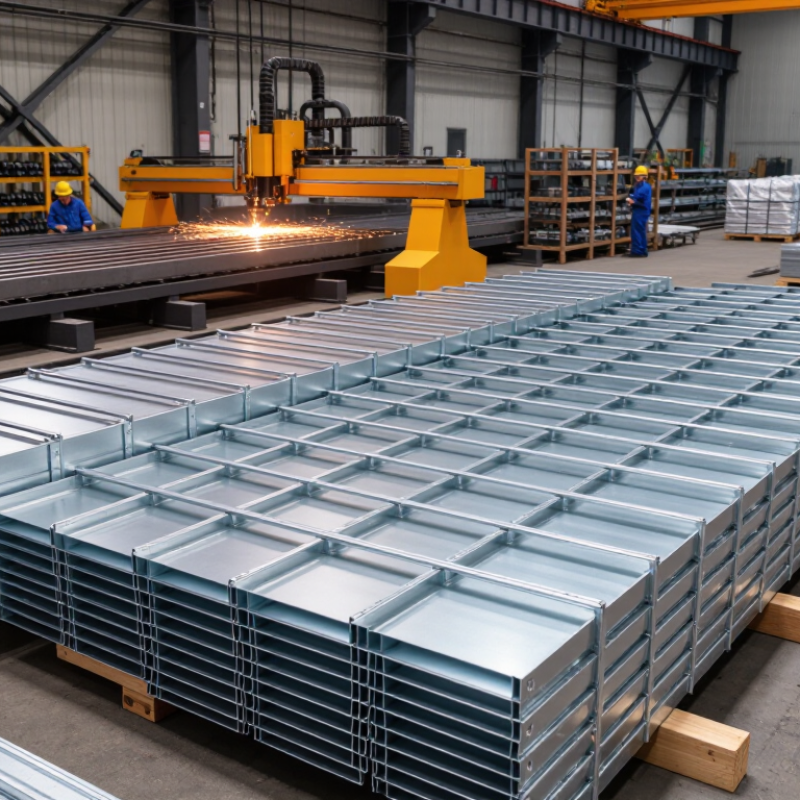
China Top Steel Grating Manufacturers for Global Buyers
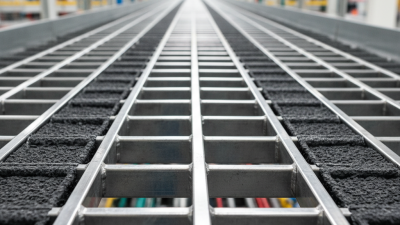
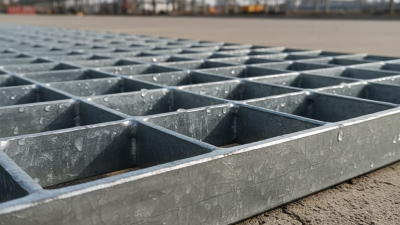
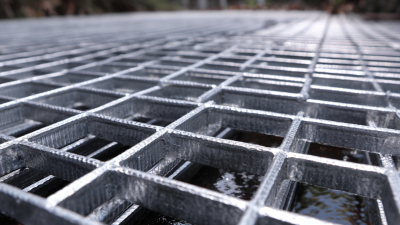
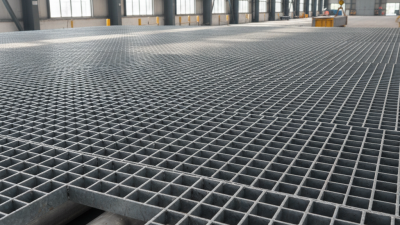
Steel grating provides open, strong walking surfaces for platforms, stairs, drainage covers, and maintenance areas. Its basic structure uses load-bearing bars and smaller cross bars. Bearing bars carry the main load, so their direction must match the shortest support span. This detail is often overlooked during site discussions.
Common types include welded, press-locked, riveted, and swage-locked grating. Welded grating suits heavy industrial platforms because its joints resist movement. Press-locked grating offers a clean appearance and can support lighter architectural applications. Carbon steel is economical and widely used. Hot-dip galvanized steel improves corrosion resistance outdoors. Stainless steel performs better in aggressive, wet, or hygienic environments, while aluminum reduces weight. Material choice should follow exposure, load, maintenance access, and local safety requirements.
Bar sizes often include 25 × 3 mm, 30 × 5 mm, and 40 × 5 mm, but engineering calculations should determine the final section. Spacing from 30 to 100 mm changes drainage, visibility, heel safety, and cleaning effort. Smaller openings feel more stable underfoot. Larger openings reduce material use but may create hazards for small tools or footwear. Always confirm whether spacing means bearing-bar pitch or cross-bar pitch. The terms are not interchangeable. A specification can look complete and still fail on this point. I have seen drawings omit support conditions, making an otherwise reasonable bar size unreliable. Load tables, deflection limits, surface treatment, tolerances, and inspection records should be checked before production.
| Grating Type | Common Material | Typical Bearing Bar Sizes (Height × Thickness) |
Bearing Bar Spacing (Centre-to-Centre) |
Typical Cross Bar Spacing | Surface Option | Typical Applications |
|---|---|---|---|---|---|---|
| Welded Steel Grating | Carbon steel; stainless steel available | 25 × 3 mm 25 × 5 mm 32 × 5 mm |
30, 40, 50, 60, 75, 80, 90, or 100 mm | 50, 75, or 100 mm | Plain or serrated bearing bars | Platforms, walkways, stair treads, drainage covers, and industrial floors |
| Heavy-Duty Welded Grating | Carbon steel or weather-resistant steel | 40 × 5 mm 50 × 5 mm 60 × 5 mm 75 × 6 mm |
30, 40, 50, 60, 75, or 100 mm | 50 or 100 mm | Plain or serrated | Vehicle-access platforms, plant floors, loading areas, and maintenance walkways |
| Press-Locked Grating | Carbon steel, aluminium, or stainless steel | 25 × 3 mm 30 × 3 mm 32 × 5 mm 40 × 5 mm |
30, 40, 50, 60, 75, or 100 mm | 50 or 100 mm | Plain or serrated bearing bars | Architectural flooring, ventilation panels, screens, and light industrial platforms |
| Swage-Locked Grating | Aluminium or stainless steel; carbon steel available | 25 × 3 mm 30 × 3 mm 40 × 5 mm |
30, 40, 50, 60, 75, or 100 mm | 50 or 100 mm | Plain, serrated, or special anti-slip finish | Corrosion-sensitive areas, platforms, ramps, bridges, and architectural applications |
| Riveted Grating | Carbon steel or stainless steel | 25 × 5 mm 32 × 5 mm 40 × 5 mm |
40, 50, 60, 75, or 100 mm | 50 or 100 mm | Plain or serrated | Heavy industrial floors, access platforms, and high-impact service areas |
| Serrated Safety Grating | Galvanized carbon steel or stainless steel | 25 × 3 mm 25 × 5 mm 32 × 5 mm 40 × 5 mm |
30, 40, 50, 60, 75, or 100 mm | 50 or 100 mm | Raised serrations on bearing bars | Wet floors, oily environments, ramps, stairs, and outdoor walkways |
| Galvanized Steel Grating | Low-carbon structural steel with zinc coating | 25 × 3 mm 25 × 5 mm 32 × 5 mm 40 × 5 mm |
30, 40, 50, 60, 75, 80, 90, or 100 mm | 50, 75, or 100 mm | Hot-dip galvanized; plain or serrated | Outdoor platforms, wastewater facilities, construction sites, and utility walkways |
| Stainless Steel Grating | Austenitic stainless steel, commonly 304 or 316 grades | 25 × 3 mm 25 × 5 mm 32 × 5 mm 40 × 5 mm |
30, 40, 50, 60, 75, or 100 mm | 50 or 100 mm | Mill finish, polished, or serrated | Food processing, chemical plants, marine locations, and hygienic areas |
| Aluminium Grating | Structural aluminium alloy | 25 × 3 mm 30 × 3 mm 40 × 5 mm |
30, 40, 50, 60, 75, or 100 mm | 50 or 100 mm | Mill finish or anodized finish | Lightweight platforms, electrical areas, marine structures, and decorative flooring |
| Technical Notes: Bearing bar spacing is measured from centre to centre of adjacent load-bearing bars. Cross bar spacing is measured from centre to centre of adjacent cross bars. Actual load capacity depends on bearing bar size, span, material grade, support conditions, panel dimensions, deflection limits, and applicable project standards. Final selection should be verified by a qualified structural engineer. | ||||||

China’s reliable steel grating manufacturers work across GB, ASTM, and EN requirements. Each standard defines different dimensions, loads, materials, and testing methods. GB standards often guide domestic production and inspection. ASTM requirements are common for North American projects. EN standards support many European applications and emphasize calculated performance. Buyers should never assume that one standard replaces another.
ISO 9001 certification shows that a factory operates a documented quality management system. It does not automatically prove that every grating panel meets your project specification. Ask for material certificates, welding inspection records, dimensional reports, and surface treatment details. Check bearing bar size, cross-bar spacing, panel tolerance, and load capacity. Galvanizing thickness also deserves attention, especially in wet or coastal environments. Experienced procurement teams compare test results with approved drawings. They also confirm whether inspection occurs before shipment.
Tips: Send a clear technical schedule before requesting quotations. Include steel grade, standard, dimensions, finish, loading condition, and delivery port. Request traceability from raw material to finished panels. A factory may provide attractive samples yet struggle with batch consistency. That risk is easy to overlook. Independent inspection can reveal uneven welds, sharp edges, or coating variation. No checklist is perfect. Review it after every project and record what went wrong. Reliable suppliers usually welcome technical questions and provide evidence instead of vague promises.
China’s steel grating suppliers differ sharply in capacity, MOQ, lead time, and quality control. The World Steel Association reported global crude steel production of about 1.89 billion tonnes in 2023. That scale supports strong manufacturing depth, but it does not guarantee consistent grating quality.
Large factories may offer monthly capacities above 5,000 tonnes, while specialized workshops often produce below 1,000 tonnes. These figures should be verified through production records, not brochures. Standard export orders commonly begin at 20–50 tonnes, although custom projects may require higher MOQs.
Stock panels can ship within 7–15 days. Custom-cut or galvanized orders usually require 25–45 days. Port congestion can add more time.
Quality checks should include flatness, bearing-bar spacing, weld integrity, load testing, and zinc coating thickness. ASTM A123 and ISO 1461 provide useful galvanizing references. Buyers should request mill certificates, coating test results, dimensional reports, and random inspection photos. A supplier claiming 100% inspection deserves detailed evidence. One weakness remains: inspection percentages are often self-reported. Independent checks are safer.
For serious comparisons, score each supplier against delivered capacity, confirmed MOQ, realistic lead time, and defect rate. The cheapest quotation may hide rework, uneven bars, or late documentation. A small trial order can reveal more than a polished audit report.
Technical selection should begin with the load class, not the panel price. Foot traffic, hand carts, forklifts, and maintenance vehicles create very different demands.
Span changes everything. Measure the clear opening and confirm the bearing direction before ordering. Grating bars must usually run across the shortest span. Longer spans increase deflection quickly.
Engineers should check both ultimate strength and serviceability. A panel may carry the calculated load but still feel unsafe when it bends too much.
Project specifications often limit deflection to a fraction of the span, such as L/200 or L/250. These limits vary by application.
Small errors matter. Confirm concentrated loads, impact, support width, and drainage requirements with the fabricator.
For outdoor platforms, a 610 g/m² zinc coating is a useful reference for corrosion protection. However, buyers should clarify whether this value means total coating mass or one-side coverage.
Surface preparation, coating uniformity, cut edges, and weld repairs also affect service life. I have seen acceptable drawings fail during installation because support levels were uneven.
Field conditions differ. Request certified test data, dimensional inspection records, and coating measurements from independent or qualified sources.
A competent Chinese manufacturer should explain its steel grade, welding process, load tables, and tolerance limits clearly. The specification may still need revision after a site review.
China Top Steel Grating Manufacturers for Global Buyers
Global Procurement: Incoterms, Packaging, Inspection, and HS Code 7308.90
Experienced buyers define delivery terms before comparing steel grating prices. Under Incoterms 2020, confirm who pays freight, insurance, loading, and import costs. FCA may suit container shipments, while CIF can simplify ocean freight planning. These terms do not define product quality or ownership transfer. That detail needs a separate sales agreement.
Packaging should match the route, climate, and lifting method. Bundled panels need steel straps, timber supports, and clear lifting points. Export crates can reduce damage during repeated handling. Add separators when serrated edges could scratch galvanized surfaces. Desiccant bags help in humid voyages, but they are not a complete moisture solution. I have seen good products arrive with bent frames because packaging was treated as an afterthought.
Inspection should cover dimensions, bearing bars, cross bars, welds, surface treatment, and load requirements. Request mill certificates, coating records, packing photos, and a pre-shipment inspection report. Sampling is useful, but it can miss isolated defects. A practical inspection plan should state sample size and rejection limits. For customs, HS code 7308.90 is commonly considered for iron or steel structures and parts. Classification can vary by product design and destination country. Confirm the code with a qualified customs professional before shipment. Small documentation errors can delay clearance and weaken cost forecasts.
This chart compares selected Incoterms commonly used for international steel grating procurement. A value of 1 indicates that the seller is normally responsible for arranging the activity under the named rule; 0 indicates that the buyer normally assumes it. Contract-specific terms may modify these default allocations.
FCA and FOB generally leave import clearance to the buyer, while DDP places import clearance with the seller. CIF, DAP, and DDP require the seller to arrange the main carriage. For steel grating classified under HS 7308.90 (“Other” structures and parts of structures of iron or steel), the final tariff treatment and documentation requirements should be confirmed with the importing country’s customs authority.