7 Tips to Calculate I Bar Steel Grating Weight

Calculating I Bar Steel Grating Weight looks straightforward, yet small measurement errors can affect procurement, lifting plans, and structural checks. An I-bar panel is not a solid plate. Its weight depends on bearing-bar height, thickness, spacing, crossbar size, panel length, width, and surface treatment. The seven tips in this guide connect shop-floor measurements with dependable engineering practice.

The NAAMM MBG 531-19 Metal Bar Grating Manual provides recognized guidance for bar-grating construction, terminology, and product selection. Its dimensional approach supports a practical calculation method based on steel volume and density. For carbon steel, engineers commonly use approximately 7,850 kilograms per cubic meter, consistent with values used in structural-steel design references such as the AISC Steel Construction Manual. The World Steel Association’s World Steel in Figures 2024 also shows the scale and importance of steel production worldwide, but production statistics do not replace product-specific weight tables.

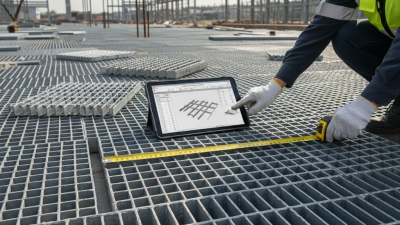
Measure carefully.

In fabrication reviews, I have seen estimates fail because crossbars were ignored or coatings were counted twice. A calculator may produce a neat number while using the wrong bar profile. That is the uncomfortable part. Weight must be checked against supplier drawings, tolerances, weld details, and actual panel dimensions. Galvanizing can add mass, although the increase varies with surface condition and coating thickness.

These tips will explain how to identify every component, convert dimensions consistently, apply density correctly, and verify the result against manufacturer data. The final figure should support transport planning, crane selection, and installation safety. It should not be treated as an unquestionable number. Engineering judgment still matters.
7 Tips to Calculate I Bar Steel Grating Weight

Identify the Key Dimensions of I-Bar Steel Grating

To calculate I-bar steel grating weight, start by identifying its exact dimensions. Measure the panel length and width in millimeters. Record the bearing bar height, flange width, and web thickness. These details define the I-shaped cross-section and strongly influence the final weight. Do not rely only on a general product description.

Check the bearing bar spacing from center to center. Then measure the cross-bar diameter, shape, and spacing. A twisted cross bar, round bar, or pressed bar can produce different weights. Include edge bars, banding bars, and support plates when they are welded to the panel. Small additions matter. Galvanizing also adds weight, although the increase is usually modest. Always use actual measurements when available.

For a reliable estimate, calculate the steel volume and multiply it by steel density, commonly about 7,850 kilograms per cubic meter. Calculate bearing bars and cross bars separately, then add the edge components. A supplier’s mass table can provide a useful comparison, but tables may use nominal sizes. One overlooked millimeter can affect a large order. No estimate is perfect without a fabrication drawing. Recheck the dimensions against the final panel layout, especially when cut-outs or irregular borders are present. Mistakes often begin with spacing, not arithmetic.

Measure Bearing Bars, Cross Bars, and Panel Spacing

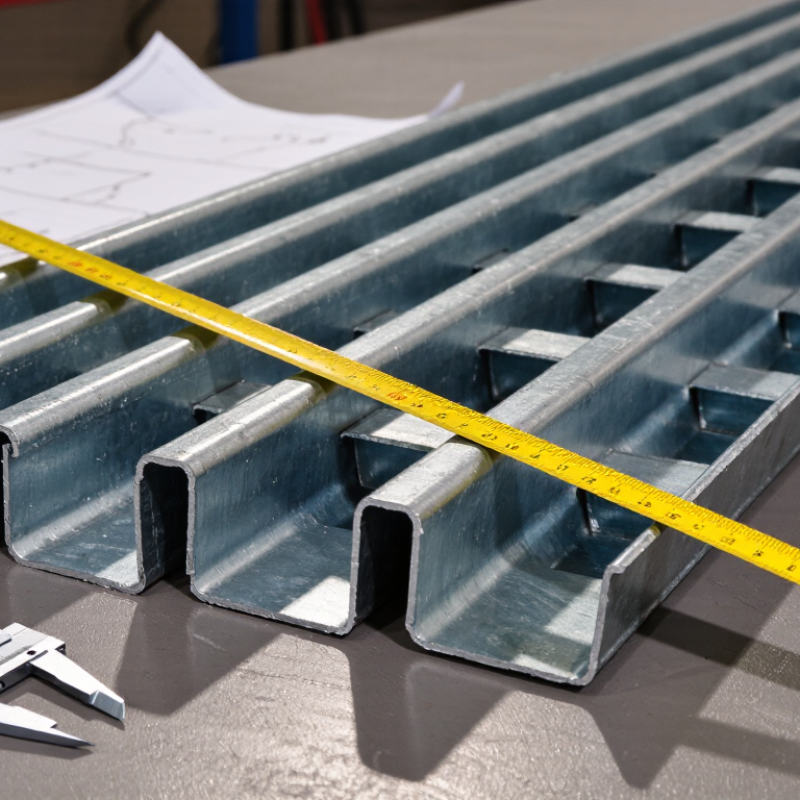
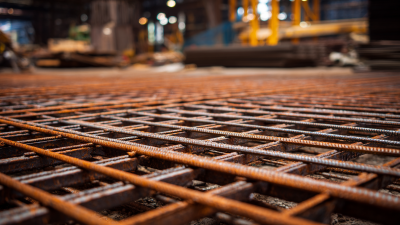
Accurate I bar steel grating weight starts with three measurements: bearing bars, cross bars, and panel spacing. Measure one bearing bar with calipers, not only its stated height. Record the flange width, web thickness, and overall depth in millimeters. The I shape contains less steel than a solid rectangle. That difference matters. Count the bearing bars across the panel, then verify their center-to-center spacing. Check both edges. Small spacing changes can affect the final count.

Measure the panel length along the bearing bars. Measure its width across them. Then record the cross bar diameter, width, or depth, depending on its shape. Count each cross bar and measure its actual spacing. For a practical estimate, calculate the volume of all bearing bars and cross bars, then multiply the total by steel density, about 7,850 kilograms per cubic meter. Add a small allowance for welds and edge bars. Do not assume every panel has identical details.

My first estimate used nominal dimensions and missed several kilograms. The error came from ignoring the end bars. Recheck the drawing against a real panel. A calibrated scale provides stronger evidence than a calculation alone. If the grating has cutouts, subtract their steel volume. Keep units consistent. Millimeters mixed with meters create convincing but unreliable results. Record every measurement beside the panel number. This makes later verification faster.

7 Tips to Calculate I Bar Steel Grating Weight - Measure Bearing Bars, Cross Bars, and Panel Spacing

Configuration I-Bar Section
Height × Thickness
Flange Width Web Thickness Steel Area
(mm²)
Bearing Bar Mass
(kg/m)
Bearing Bar Spacing
(mm)
Cross Bar Diameter
(mm)
Cross Bar Mass
(kg/m)
Cross Bar Spacing
(mm)
Panel Size
(m × m)
Estimated Grating Weight
(kg/m²)
Estimated Panel Weight
(kg)
A 25 × 2 mm 10 mm 2 mm 82 0.644 30 6 0.222 100 1.0 × 2.0 23.68 47.35
B 30 × 2 mm 10 mm 2 mm 92 0.722 30 6 0.222 100 1.0 × 2.0 26.29 52.59
C 40 × 3 mm 12 mm 3 mm 174 1.366 40 6 0.222 100 1.2 × 2.4 36.37 104.74
D 50 × 3 mm 15 mm 3 mm 222 1.743 40 8 0.396 100 1.0 × 2.0 47.53 95.05
Calculation basis: Steel density is taken as 7,850 kg/m³. I-bar steel area is calculated as 2 × flange width × flange thickness + web thickness × (section height − 2 × flange thickness). Bearing bar contribution is calculated from bearing bar mass × 1,000 ÷ bearing bar spacing. Cross bar contribution is calculated from cross bar mass × 1,000 ÷ cross bar spacing. The estimated panel weight excludes end plates, support frames, weld metal, surface treatment, and dimensional tolerances.

Calculate the Steel Volume Using a Clear Formula

7 Tips to Calculate I Bar Steel Grating Weight

Calculate the Steel Volume Using a Clear Formula

I bar grating weight starts with volume, not guesswork. Use this formula: Weight = Steel volume × steel density. For a rectangular panel, calculate volume as: Panel length × panel width × steel volume per square metre. For I bars, steel volume per square metre includes bearing bars, cross bars, and perimeter edging. Calculate each part separately, then add them together. Use 7,850 kg/m³ as the standard density for carbon steel. A 1.2 m × 3 m panel has 3.6 m² of surface area. If its calculated steel volume is 0.018 m³, the estimated weight is 141.3 kg.

Spacing changes the result sharply. For example, reducing bearing-bar spacing from 40 mm to 30 mm adds approximately 33% more bearing bars. The bar height, flange width, and web thickness also matter. Do not use the visual panel area alone. Open spaces are not steel volume. Measure the actual I-bar section from a drawing or verified section table.

The World Steel Association reported 1.892 billion tonnes of global crude steel production in 2023, showing the scale of standardized steel use. Yet production scale does not remove calculation risk. Fabrication tolerances, weld metal, cut-outs, and galvanizing can alter shipping weight. Real projects are less tidy. I once treated edging as negligible; the final estimate was noticeably low. Recheck every perimeter bar, especially on small panels. The formula is clear, but the inputs deserve skepticism.

Adjust the Result for Bar Shape, Frame, and Surface Treatment

7 Tips to Calculate I Bar Steel Grating Weight

Accurate I bar steel grating weight starts with the bearing bar section. Do not treat an I bar like a solid rectangle. Measure its flange width, web thickness, and overall depth, then calculate the true cross-sectional area. Use the steel density specified by your project standard, commonly about 7,850 kg/m³. Small errors grow.

Check the bar pitch and panel dimensions carefully. A closer pitch increases the number of bearing bars and raises the weight. Include the panel length, width, and cutouts in your calculation. I usually compare the calculated quantity with a physical sample or supplier drawing. Scale readings can expose mistakes that formulas hide. Do not guess.

The frame also needs separate attention. Add the perimeter angle or flat bar, corner joints, lifting holes, weld metal, and support clips when they remain attached during delivery. A mitered frame may use less steel than an overlapping frame. Surface treatment changes the final result too. Hot-dip galvanizing can add several percent, depending on coating thickness, drainage, and steel surface condition. Paint usually adds less, but it should still be recorded for strict shipping limits. Allow for fabrication tolerances, because real panels rarely match ideal dimensions perfectly. I once ignored a small access opening and overstated one panel’s weight. That correction changed the handling plan. Verify the result with a calibrated scale when safety and lifting capacity matter.

Verify the Final Weight Against Manufacturer Data

7 Tips to Calculate I Bar Steel Grating Weight

Verify the Final Weight Against Manufacturer Data

I bar steel grating weight begins with accurate measurements. Record the bearing bar depth, thickness, length, width, and spacing. Include cross bars, end plates, and support clips when they remain attached. A simple formula is useful: panel volume multiplied by steel density. However, this estimate can miss weld metal and small connection pieces.

Tip 1: Check the unit system before calculating. Mixing millimeters with meters can create a serious error. Tip 2: Use the published mass per square meter when available. This value usually reflects the actual bearing and cross-bar arrangement. Tip 3: Measure several panels, not only one. Manufacturing tolerances can change the result slightly. Real projects are rarely perfect.

After calculating the expected mass, compare it with the manufacturer’s technical data. Check whether the listed weight applies to bare steel, galvanized steel, or a finished panel. Galvanizing may add a small amount of mass. Also confirm whether the data includes banding, cutouts, stair nosings, and fixing accessories. Request a product drawing or certified weight sheet for large orders. Then weigh a sample panel on a calibrated industrial scale. The result may not match your spreadsheet exactly, and that deserves investigation rather than dismissal. A missing end bar or incorrect spacing assumption can explain the difference. Keep the final calculation, drawing revision, and measured result together for future quality checks.

7 Tips to Calculate I-Bar Steel Grating Weight

How to use this chart: The estimated mass is based on carbon-steel density of 7,850 kg/m³, a 30 mm bearing-bar pitch, and a nominal allowance for cross bars and fastening components. Actual production weight should be verified against the manufacturer’s data.

  1. Confirm the bearing-bar height and thickness.
  2. Check the bearing-bar pitch, such as 30 mm or 40 mm.
  3. Calculate the bearing-bar steel volume per square metre.
  4. Add the cross-bar contribution and connection details.
  5. Use the actual panel length and width for total weight.
  6. Allow for fabrication tolerances and surface treatment.
  7. Verify the final calculated weight against the supplied manufacturer data.
WhatsApp Online Chat !