Steel grating is widely used for platforms, walkways, drainage covers, stair treads, and industrial access areas across China. Its weight affects structural loading, transportation cost, lifting plans, and installation safety. The World Steel Association’s World Steel in Figures 2024 confirms China’s major position in global steel production, making accurate grating data especially relevant for domestic projects and exports. Yet production scale does not replace careful calculation.
Steel Grating Weight depends on bearing-bar size, cross-bar pitch, panel length, surface treatment, and banding. A 30 × 5 mm bearing bar will not match a 40 × 5 mm bar, even when both panels share the same pitch. The commonly used steel density is approximately 7,850 kg/m³. Our chart and calculator use this value with practical geometric inputs. They also help compare plain, serrated, galvanized, and painted grating options. For technical verification, buyers should review YB/T 4001.1-2019, the Chinese steel-grating standard, and relevant platform-access guidance in ISO 14122-2.
Small details matter. A 1.0 m × 2.0 m panel may require different handling equipment after banding and galvanizing. Actual delivery weight can vary from theoretical weight because of manufacturing tolerances, zinc coating, welds, and edge bars. This is where simple online tables sometimes become misleading. The calculator offers a dependable estimate, not an engineering approval. Project teams should confirm final dimensions with certified mill data, approved drawings, and supplier weighing records. We may still miss unusual reinforcement. That limitation deserves attention. Accurate checking remains the safer habit.
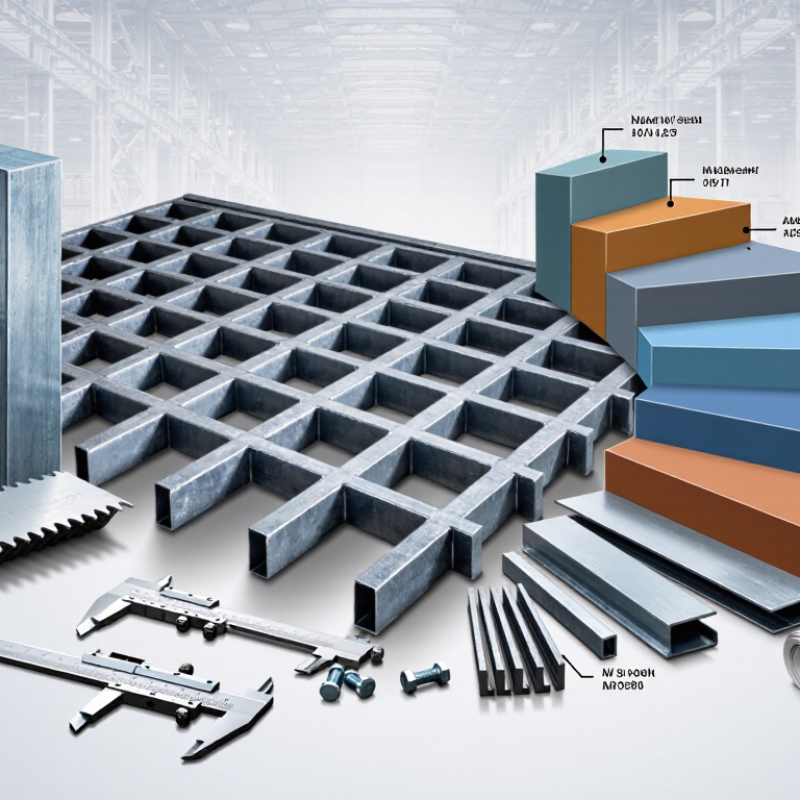
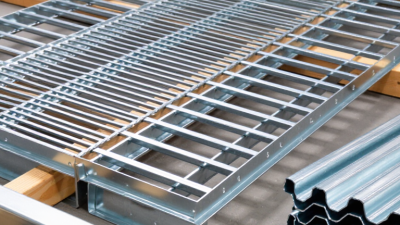
Steel grating weight depends on more than panel size. The grating type also changes the result. Welded grating uses cross bars welded to bearing bars, creating a rigid walking surface. Press-locked grating has tightly fitted bars and often uses thinner cross bars. Swage-locked grating forms a strong bond through mechanically pressed connections. Each design distributes steel differently.
Bearing bar height and thickness usually control most of the weight. A 30 × 3 mm bearing bar weighs less than a 40 × 5 mm bar. Closer bearing-bar spacing adds steel and increases the load capacity.
Cross-bar diameter, spacing, panel length, and surface treatment also matter. Galvanizing adds a small amount of mass, while serrated surfaces can slightly change the steel volume. The difference may seem minor, but large orders expose it.
A practical calculator starts with the estimated weight per square metre. Multiply that value by panel length and width, then adjust for cut-outs, bands, and support bars.
For example, a one-square-metre panel rated at 32 kg/m² weighs about 32 kg before extra edge bars.
Confirm the value against production drawings. A chart is useful, but never perfect. Steel tolerances, weld metal, and finishing methods can shift the final weight. I would not use a catalogue estimate for lifting plans without checking the actual fabrication details. That step is easy to overlook.
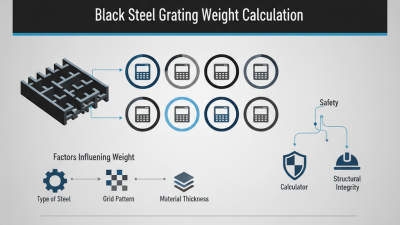
Reading a steel grating weight chart starts with the bearing bar, not the panel size.
Find its width, thickness, and center spacing first. A 30 x 3 mm bar at 30 mm centers carries more steel than a 25 x 3 mm bar at 40 mm centers. The chart may list kilograms per square meter, kilograms per panel, or pounds per square foot. Check the unit heading carefully.
NAAMM’s Metal Bar Grating Manual presents load and construction data using bearing-bar dimensions, spacing, and cross-bar details. Engineering calculations commonly use 7,850 kg/m³ for carbon steel density, consistent with EN 1993-1-1 reference values.
For a simple estimate, calculate bearing-bar volume, add cross-bar volume, then multiply by 7,850. For example, 30 x 3 mm bars at 30 mm centers produce about 23.6 kg/m² before cross bars. Adding 6 mm round cross bars at 100 mm spacing brings the estimate close to 26 kg/m². Small differences matter.
Do not treat every chart as interchangeable. Serrated surfaces, weld allowances, galvanized coatings, and dimensional tolerances can change the delivered weight. ASTM A6 dimensional tolerances also remind engineers that manufactured sections are not perfectly theoretical.
A useful checking habit is comparing the chart value with a hand calculation. If the difference looks large, inspect the cross-bar pitch first. That detail is easy to miss.
My own correction would be simple: never calculate from panel length alone. A weight chart describes the steel pattern, not merely the finished rectangle.
China Top Steel Grating Weight Chart and Calculator
Steel grating weight calculation starts with accurate measurements, not a chart alone. Measure panel length, width, bearing-bar depth, bearing-bar thickness, cross-bar diameter, and spacing. Record every value in millimetres. A small spacing error can affect many panels.
A practical formula is: Weight = panel area × theoretical steel volume per square metre × steel density. For flat bearing bars, estimate steel volume from the bearing bars and cross bars separately. Use 7,850 kg/m³ as the standard carbon-steel density. This value aligns with engineering references used by the American Institute of Steel Construction. For serrated bars, use the manufacturer’s verified mass correction, because tooth geometry changes the actual volume. Do not treat serration as a simple surface detail.
For example, a 1,000 mm × 3,000 mm panel has 3 m² of area. If its calculated mass is 42 kg/m², the estimated panel weight is 126 kg. Add 2–5% for clips, edge bars, and fabrication tolerance when planning transport. ASTM A36 data commonly lists a 36 ksi minimum yield strength, but strength does not determine weight. Geometry does.
Check the result twice.
Professional steel data reports show why disciplined measurement matters. World Steel Association’s World Steel in Figures 2024 reported about 1.89 billion tonnes of crude steel production in 2023, reflecting the scale of standardized steel manufacturing. Yet field conditions remain imperfect. Coatings, welded borders, moisture, and cutting losses can change delivered weight. Compare the calculator result with a calibrated scale or certified mill data before lifting or structural verification.
Estimated steel grating weight by bearing bar size
The chart shows theoretical bare-steel weight for grating with 30 mm bearing-bar spacing, 100 mm cross-bar spacing, and 6 mm diameter round cross bars. The calculation uses a steel density of 7,850 kg/m³ and excludes edge bands, welding allowances, surface treatment, and packaging.
Formula: Weight (kg/m²) = [Bearing bar area × bearing bars per metre + Cross bar area × cross bars per metre] × 7,850
Actual product weight may vary according to bearing-bar height and thickness, cross-bar type, panel dimensions, spacing tolerances, and manufacturing details.
A steel grating weight calculator starts with accurate measurements. Record the panel length, width, bearing bar depth, bearing bar thickness, and spacing. Add the cross-bar diameter and spacing. Small input errors matter. A 3 mm thickness change can noticeably affect the final load.
Use this practical formula: weight equals steel volume multiplied by density. For carbon steel, use approximately 7,850 kg/m³, a value referenced in structural steel design data. For example, 30 × 5 mm bearing bars at 30 mm centers contain about 39.3 kg of steel per square metre before cross bars. A 6 mm round cross bar at 100 mm spacing adds roughly 2.2 kg/m². The estimated total becomes 41.5 kg/m². Multiply that figure by the panel area.
Check the calculator result against published mass tables and supplier drawings. The World Steel Association reported 1,892.2 million tonnes of crude steel production in 2023, showing the scale of steel use, but production data does not replace product-specific verification. Include galvanizing allowance only when the specification requires it. Coating weight varies with surface condition and process control. I usually recalculate one sample manually. It catches unit mistakes. The result is still an estimate, not a certified shipping weight. Installation clips, banding, cut-outs, and tolerance can change the final figure.
| Bearing Bar Height (mm) |
Bearing Bar Thickness (mm) |
Bearing Bar Pitch (mm) |
Cross Bar Size (mm) |
Cross Bar Pitch (mm) |
Bearing Bar Weight (kg/m²) |
Cross Bar Weight (kg/m²) |
Theoretical Total Weight (kg/m²) |
Theoretical Weight (kg per 1 m × 2 m panel) |
|---|---|---|---|---|---|---|---|---|
| 25 | 3 | 30 | 6 × 6 | 100 | 19.63 | 2.83 | 22.46 | 44.92 |
| 30 | 3 | 30 | 6 × 6 | 100 | 23.55 | 2.83 | 26.38 | 52.76 |
| 32 | 5 | 30 | 6 × 6 | 100 | 41.89 | 2.83 | 44.72 | 89.44 |
| 35 | 5 | 30 | 6 × 6 | 100 | 45.81 | 2.83 | 48.64 | 97.28 |
| 40 | 5 | 30 | 6 × 6 | 100 | 52.34 | 2.83 | 55.17 | 110.34 |
| 45 | 5 | 30 | 6 × 6 | 100 | 58.88 | 2.83 | 61.71 | 123.42 |
| 50 | 5 | 30 | 6 × 6 | 100 | 65.42 | 2.83 | 68.25 | 136.50 |
| 60 | 6 | 30 | 6 × 6 | 100 | 94.20 | 2.83 | 97.03 | 194.06 |
| Calculation Item | Input or Formula | Result |
|---|---|---|
| Bearing bar | 30 mm × 3 mm, 30 mm pitch | 23.55 kg/m² |
| Cross bar | 6 mm × 6 mm, 100 mm pitch | 2.83 kg/m² |
| Total grating weight | 23.55 + 2.83 | 26.38 kg/m² |
| Panel dimensions | 1.00 m × 2.00 m | 2.00 m² |
| Estimated panel weight | 26.38 × 2.00 | 52.76 kg |
China Top Steel Grating Weight Chart and Calculator
Practical weight examples begin with the steel volume, not a catalogue guess. Using 7,850 kg/m³, the density applied in EN 1993-1-1 structural steel calculations, a 30 × 5 mm bearing bar at 30 mm centers weighs about 39.3 kg/m². Adding 6 mm round cross bars at 100 mm centers raises the estimated mass to 41.5 kg/m². A 1,000 × 2,000 mm panel therefore weighs approximately 83 kg. These dimensions follow the measurement approach described in the NAAMM MBG 531 Metal Bar Grating Manual.
Smaller sections change the result quickly. A 25 × 5 mm grating with the same spacing weighs about 34.9 kg/m². Its 600 × 1,000 mm panel weighs roughly 21 kg. A 30 × 3 mm version reaches about 25.8 kg/m², or 74 kg for a 1,200 × 2,400 mm panel. ASTM A123/A123M notes that zinc coating affects the final mass, while banding and end plates add more weight. Shipping figures should include them. The calculator can mislead when it ignores cut-outs, welded supports, or manufacturing tolerance. Real panels are rarely perfect rectangles. A verified supplier drawing remains more reliable than a bare spreadsheet.