10 Tips for Understanding Galvanized Steel Grating Weight?
Understanding Galvanized Steel Grating Weight is essential for various construction projects. This type of grating is widely used in flooring, walkways, and drainage covers. However, its weight can influence installation and structural integrity. Knowing the factors affecting Galvanized Steel Grating Weight is key.
Many builders overlook the nuances of weight calculations. The thickness of the grating, the material composition, and its design greatly impact overall weight. Additionally, the purpose of the grating—whether for heavy industrial use or light pedestrian traffic—also dictates its specifications. These aspects require careful consideration.
For professionals, accurate weight assessment is non-negotiable. It can affect safety, durability, and performance. Misjudging the weight can lead to installation errors. Therefore, a thorough understanding of Galvanized Steel Grating Weight should never be underestimated. Getting it right matters significantly.

Understanding the Basics of Galvanized Steel Grating Weight
Galvanized steel grating is a popular choice in various industries. Understanding its weight is crucial for effective application. Typically, its weight depends on the grid pattern, thickness, and material density. Reports indicate that standard galvanized steel grating weighs about 1.5 to 2.5 pounds per square foot. This information assists engineers and project managers in planning their layouts.
When evaluating grating options, consider the load requirements. Heavier grating generally supports more weight, but it also incurs higher shipping costs. For heavy-duty applications, selecting a thicker profile can significantly enhance strength. However, ensuring proper installation and support is vital. Remember, accurate weight estimates influence cost and structural integrity.
Regularly check for any inconsistencies in calculations. Even minor errors can lead to oversights in safety and performance. An understanding of galvanized steel grating weight ensures better decision-making. It fosters a more organized approach in construction and maintenance tasks, advancing overall project efficiency. Keep these tips in mind to maximize the benefits of your grating choices.
Factors Influencing the Weight of Galvanized Steel Grating
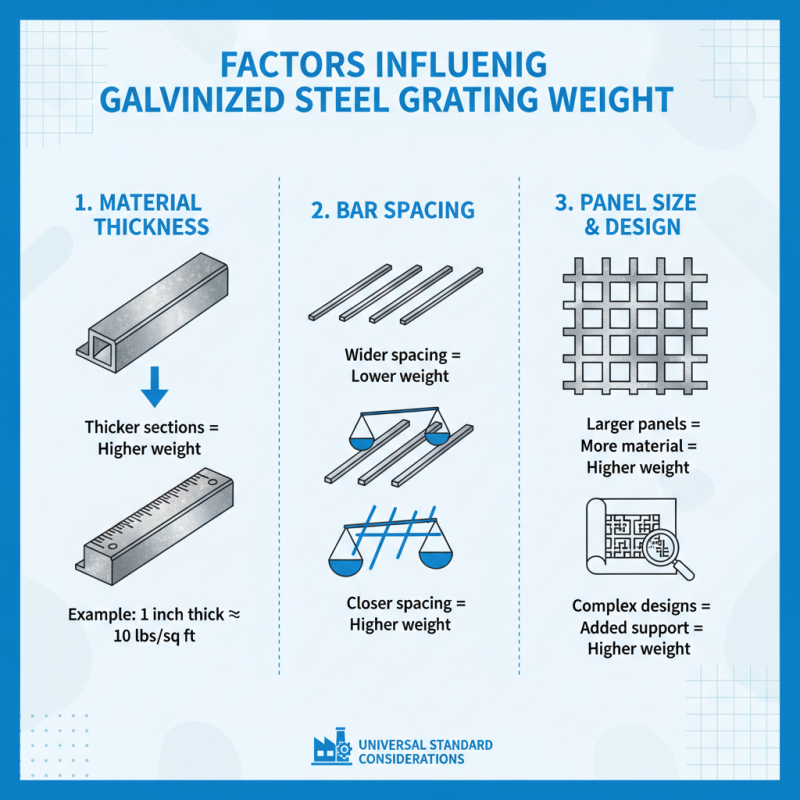
When discussing galvanized steel grating, several factors affect its weight. The material's thickness is crucial. Thicker sections increase weight significantly. For example, a universal standard notes that a common thickness of 1 inch may weigh around 10 pounds per square foot.
Another essential factor is the spacing between the bars. A tighter spacing leads to increased material usage, thus enhancing weight. Studies show that a 1-inch spacing can add up to an additional 0.5 pounds per square foot compared to 2-inch spacing. This detail is critical for applications requiring robust load-bearing capabilities.
It's important to be mindful of these elements. For clarity, consider these tips: Always verify specifications before purchasing. Understand the environmental conditions in which the grating will be used. Additionally, remember that galvanized coatings add minimal weight but improve corrosion resistance. This can enhance the grating's lifespan and value. Being aware of these factors can guide purchasing decisions effectively.
How to Calculate the Weight of Different Grating Types
Calculating the weight of galvanized steel grating is essential for construction and design projects. The weight varies based on the type and thickness of the grating. A common standard grating is the welded type, which typically weighs around 10 to 15 pounds per square foot. Heavier grates, like those used for industrial applications, may exceed 20 pounds per square foot.
To determine the weight of different grating types, use the formula: weight = area × thickness × density. For example, the density of galvanized steel is approximately 490 pounds per cubic foot. If a grating panel measures 3 feet by 2 feet and has a thickness of 0.25 inches, the calculation should consider these dimensions and apply them correctly. The result could guide decisions on load-bearing capabilities.
Understanding this helps in project planning. Nevertheless, there can be discrepancies in reported weights due to manufacturing variations. Always verify with reliable sources or engineering reports specific to your requirements. Inconsistent data can lead to unforeseen consequences in structural integrity. Accurate calculations are vital for safety and performance in any construction context.
10 Tips for Understanding Galvanized Steel Grating Weight
| Grating Type |
Weight (lbs per sq ft) |
Dimensions (inches) |
Load Capacity (lbs) |
| Heavy Duty |
6.0 |
24 x 48 |
4000 |
| Standard Duty |
4.5 |
36 x 36 |
2500 |
| Light Duty |
2.5 |
24 x 24 |
1000 |
| Floor Grating |
3.0 |
48 x 48 |
1500 |
| Mesh Grating |
1.8 |
36 x 24 |
800 |
Comparing Weight and Load Capacity in Galvanized Steel Grating
When examining galvanized steel grating, weight and load capacity are crucial factors. The weight of steel grating typically ranges from 10 to 30 pounds per square foot, depending on thickness and design. For example, a thicker grating will generally support heavier loads. This means that understanding weight helps in selecting the right option for specific applications.
Moreover, load capacity varies significantly among different grating types. Some common variations can handle loads up to 2,000 pounds per square foot. According to industry reports, a well-constructed galvanized steel grating can endure heavy traffic. However, not all designs are equal. Some may buckle under extreme weight, leading to failure.
Engineers must assess both weight and load capacity carefully. A common misconception is that heavier grating always means better load support. This is not true; sometimes, lighter options are engineered for maximum strength. Additionally, varied environmental factors, like corrosion or temperature fluctuations, can affect performance. Understanding these nuances is essential for safe and effective use in construction and infrastructure projects.
Practical Applications of Galvanized Steel Grating Based on Weight
Galvanized steel grating is a popular choice across various industries due to its unique properties, particularly its weight. The weight of the grating affects its load-bearing capacity and overall performance. According to industry reports, the average weight of galvanized steel grating ranges from 10 to 20 pounds per square foot, depending on thickness and dimensions. Understanding this aspect can lead to better material choices in construction and manufacturing.
For instance, in heavy-duty applications, choosing a heavier grating may improve its durability. Data from construction studies suggest that heavier grating can withstand higher stress loads, making it suitable for warehouse floors or industrial platforms. However, this increases the overall project weight, potentially requiring more robust support structures. Evaluating the trade-offs between weight and support systems is crucial.
Conversely, lighter galvanized grating options are advantageous for non-structural uses, such as walkways or drainage covers. These options simplify installation and reduce transport costs. According to a report by the Steel Grating Association, the demand for lighter grating is on the rise, especially in residential projects. Yet, relying solely on weight as a metric can lead to over-simplifications. It’s essential to consider factors like environment, corrosion resistance, and intended use for optimal outcomes.