Why Does Galvanized Steel Grating Weight Matter for Construction?
When constructing durable structures, the choice of materials is crucial. "Galvanized Steel Grating Weight" plays a significant role in this decision-making process. Steel grating is widely used in various applications. Its weight affects both installation and long-term performance.
Heavier grating can provide greater stability and strength. However, it may also complicate transportation and installation. Lighter options might be easier to handle yet may not meet structural demands. Understanding the balance between weight and function is key for engineers and builders.
Moreover, the weight of galvanized steel grating impacts cost and maintenance. A well-calibrated selection can enhance longevity and safety in construction projects. Therefore, careful consideration of "Galvanized Steel Grating Weight" is essential for ensuring successful outcomes.
Importance of Weight in Construction Materials
When it comes to construction, weight matters significantly. This is particularly true for materials like galvanized steel grating. The weight of this grating influences not only transport and installation costs but also the overall structural integrity of a project. Lighter materials can reduce the burden on supporting beams, which is crucial in many applications. However, with lightweight options, concerns about strength and durability often arise.
Engineers and builders must carefully consider the weight of all materials. Galvanized steel grating, while robust, can present challenges if the weight is not balanced with the structure's needs. For instance, overly heavy grating may require more substantial supports, increasing project costs. Conversely, too light a choice might compromise safety under heavy loads. Finding the right balance requires both experience and expert insight.
Furthermore, weight impacts site logistics. Heavier materials can slow down construction timelines due to additional lifting equipment or labor. This can create bottlenecks and inflate budgets. It’s essential for construction teams to analyze how weight affects their specific projects, ensuring they choose the right materials without sacrificing efficiency or safety. Balancing these factors is an ongoing challenge that requires careful thought and strategy.
Why Does Galvanized Steel Grating Weight Matter for Construction? - Importance of Weight in Construction Materials
| Material Type |
Weight (lbs/sq ft) |
Load Capacity (lbs) |
Application |
| Galvanized Steel Grating |
3.5 |
1,200 |
Walkways, Platforms |
| Aluminum Grating |
2.0 |
800 |
Light Duty Walkways |
| Mild Steel Grating |
4.0 |
1,500 |
Heavy Duty Structures |
| Stainless Steel Grating |
5.0 |
1,800 |
Corrosive Environments |
Understanding Galvanized Steel Grating and Its Characteristics
Galvanized steel grating is widely used in construction due to its unique characteristics. This material is durable, anti-corrosive, and lightweight, making it ideal for various applications. The galvanization process involves coating steel with zinc, enhancing its resistance to rust. As a result, galvanized steel grating can withstand harsh environmental conditions.
One notable aspect is its weight. The weight of galvanized steel grating can significantly affect installation and structural support. Lightweight grating facilitates easier handling and quicker installation. However, thinner grating may not provide the same load-bearing capacity as heavier options. Construction professionals should assess the specific needs of each project. It is vital to find a balance between weight and strength. A miscalculation could lead to structural failure or safety issues.
Understanding the characteristics of galvanized steel grating is essential for effective use in construction. Factors like load requirements, environmental exposure, and installation processes play crucial roles. By gaining insights into these elements, construction teams can make informed decisions. Ultimately, proper selection and application can greatly enhance the longevity and effectiveness of construction projects.
Influence of Weight on Structural Integrity and Load Capacity
In construction, the weight of galvanized steel grating plays a crucial role. A report from the American Institute of Steel Construction indicates that grating weight directly affects its structural integrity. Lighter grating may reduce construction costs but can compromise load capacity. This trade-off needs careful consideration.
When grating is too light, it may not support heavy loads effectively. For instance, a steel grating weighing 4 pounds per square foot can support up to 1,200 pounds of load per square foot. However, reduce the weight to 2 pounds per square foot, and the load capacity drops significantly. This highlights the importance of balancing weight and strength to ensure safety.
Moreover, heavy grating can increase installation difficulties. Workers need to handle heavier materials, which can lead to fatigue or accidents. The logistics of transporting these materials also becomes more complex. Therefore, while weight is essential for load capacity, the challenges posed by heavier materials cannot be overlooked. Each project may require a unique solution based on specific load and safety requirements.
Cost Implications of Using Lighter vs. Heavier Grating Options
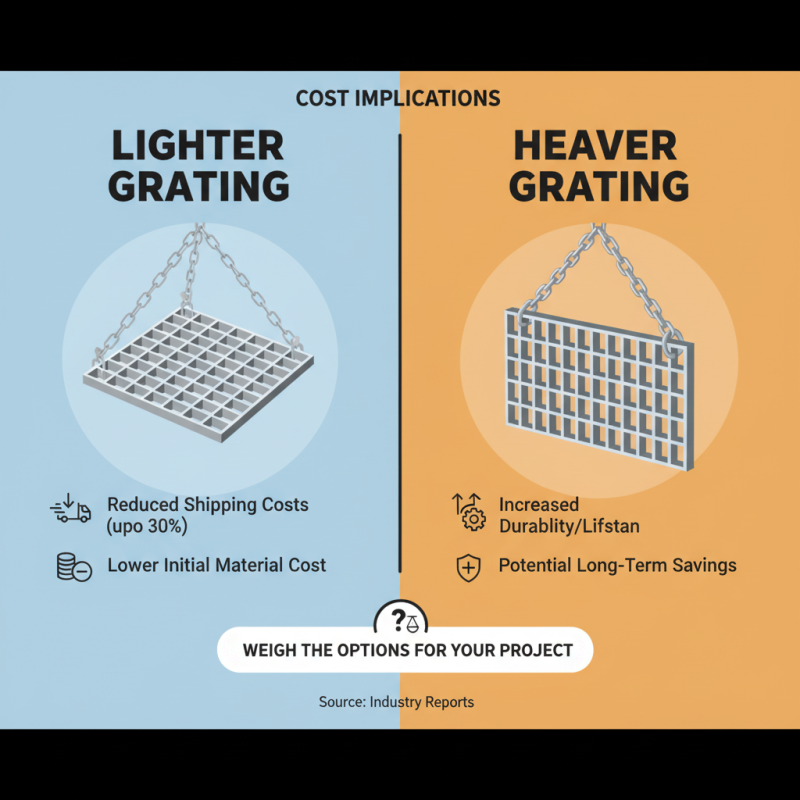
When selecting galvanized steel grating for construction, weight plays a significant role in budgeting. Lighter grating options can reduce initial costs but may lead to higher expenses in other areas. According to industry reports, lighter steel grating can lower shipping costs by up to 30%. This might seem appealing, but it is essential to consider long-term implications.
Heavy-duty grating often provides better durability. While the initial investment is higher, it can lead to lower maintenance costs over its lifespan. Switching to a heavier option might involve a larger upfront cost. However, the longevity can ultimately save money. It's worth noting that heavy grating can handle more substantial loads and harsh environments, which reduces future replacements.
Tips: Assess the load requirements for your project. Lighter grating may save money initially, but ensure it meets safety standards. Consult engineering guidelines to decide what's best. Balancing weight and cost is crucial for lasting success. Always factor in long-term performance and reliability when making decisions.
Environmental Considerations and Weight Efficiency in Construction
In construction, the weight of galvanized steel grating significantly impacts environmental sustainability. Steel is known for its durability and strength. However, its weight can complicate transportation and installation. For instance, a report by the American Institute of Steel Construction states that heavy materials increase fuel consumption during transport. This results in higher carbon emissions, which is not ideal for a green building approach.
Weight efficiency in materials can also influence project costs. According to a study from the National Institute of Standards and Technology, reducing material weight by just 20% can lower shipping costs by 15%. Lighter materials not only make logistics easier but also reduce the overall environmental footprint of a project. Additionally, using lighter materials can lead to less energy consumption during construction, providing both economic and ecological benefits.
Nonetheless, relying solely on lightweight options can raise concerns. If materials compromise structural integrity, the long-term durability of a project may suffer. It's crucial to strike a balance between weight and strength. Reassessing material choices based on their life cycle impacts allows for a more responsible approach in construction, addressing both efficiency and sustainability.