How to Choose the Right Bar Steel Grating for Your Project
When embarking on a project that requires durable flooring or walkways, selecting the right Bar Steel Grating is crucial. Industry expert John Smith has emphasized, "Choosing the appropriate grating can make or break your project." This statement rings true as various options exist, each with unique properties and applications.
Bar Steel Grating offers strength and versatility. It can withstand heavy loads and harsh environments. However, not all grating types suit every application. Factors such as load capacity, spacing, and material grade come into play. Often, project managers overlook these details, leading to expensive mistakes. It's important to analyze your specific needs before making a decision.
The right Bar Steel Grating can enhance safety and efficiency in your project. Yet, improper choices can result in operational disruptions. Consider the type of traffic, environmental conditions, and maintenance needs. Engaging with professionals can provide valuable insights. Ultimately, informed choices lead to lasting solutions.

Types of Bar Steel Grating: Understanding Your Options
Bar steel grating comes in various types. Each type has unique features to consider. It’s crucial to understand these options before making a decision.
One common type is welded bar grating. This grating offers strong support and resistance to heavy impacts. It’s often used in industrial settings. Another option is swage-locked grating. This type is lightweight yet durable, ideal for platforms and walkways. Consider where you'll use the grating. For example, outdoor environments might require corrosion-resistant materials.
Lastly, there’s bearing bar grating. This option provides excellent drainage and airflow—an essential feature for various applications. When choosing grating, think about the specific needs of your project. Will the grating face heavy loads? Is slip resistance important? Each question leads to a different decision. Reflect on these factors to find the best fit.
Factors to Consider When Selecting Bar Steel Grating
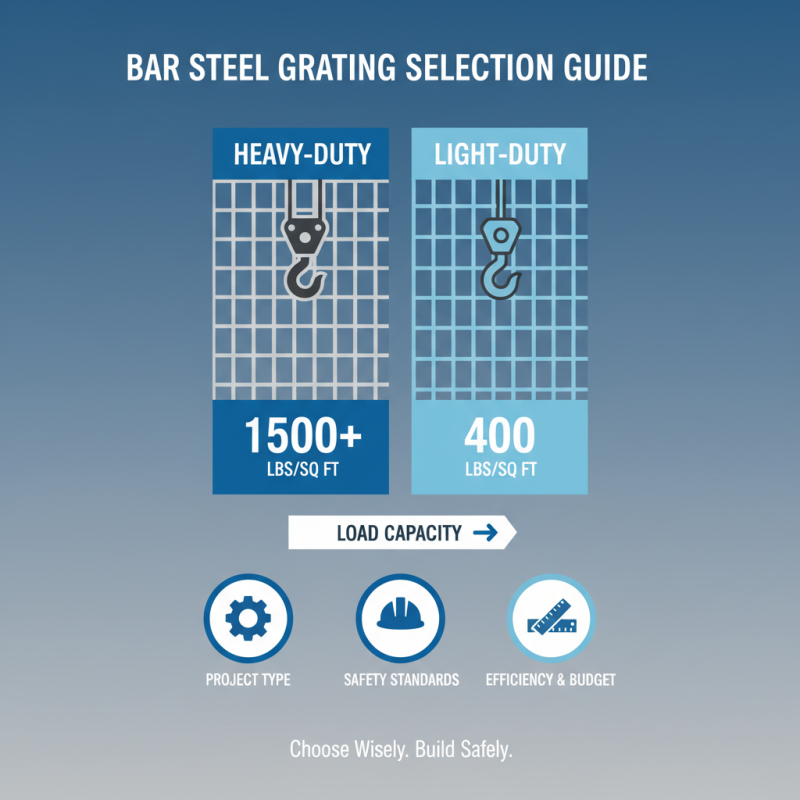
Choosing the right bar steel grating for your project involves assessing various factors. Load capacity is critical. Different projects demand different weight tolerances. According to industry data, heavy-duty grating can handle loads of over 1,500 pounds per square foot. Light-duty options may only support 400 pounds. Understanding these specifications ensures safety and efficiency.
Next, consider the environment where the grating will be installed. Corrosive environments, such as chemical plants, require high corrosion resistance. Reports indicate that stainless steel grating shows superior resistance compared to carbon steel. However, it’s more expensive. Sometimes, the budget constraints force compromises. Substituting lower-quality materials could lead to future maintenance issues.
Lastly, spacing and bar size greatly influence the grating's strength. Closer bar spacing provides better support but can limit drainage. A study showed that varying the bar sizes and spacing can affect overall durability. A miscalculated decision can result in unnecessary replacements. Evaluating all these factors holistically is essential for ensuring the grating fits both the project needs and longevity expectations.
Load-Bearing Capacities: Assessing Your Project Requirements
When selecting bar steel grating, understanding load-bearing capacities is crucial. Industry reports indicate that grating can handle varying weights, from pedestrian foot traffic to heavy industrial loads. For instance, a typical steel grating might support loads from 125 lbs/sq ft to 1,100 lbs/sq ft depending on the design and bar spacing. Knowing these specifics helps tailor the grating to your project.
Choosing the right sizing is vital. A load test shows how the chosen grating withstands pressure and bends. Many engineers recommend a safety factor of at least 1.5 times the expected load. This ensures durability. Be aware that overestimating needs can lead to unnecessary costs. Underestimating may risk structural integrity.
Tips: Consider live load versus dead load. A live load varies with use while a dead load is constant. Both affect your project’s outcome. Always consult with professionals for accurate calculations. Analyze environmental factors as well; corrosion might reduce load capacity. After reviewing your findings, reflect on whether your choices still align with project demands. Adjustments might be needed.
Surface Treatment and Corrosion Resistance in Steel Grating
When selecting bar steel grating, surface treatment is crucial. It directly impacts durability and resistance to corrosion. There are different treatment methods available. Hot-dipped galvanizing is a popular choice. It provides a robust layer that protects against rust. This method is effective in harsh environments.
However, not all projects require heavy-duty treatments. Some applications may benefit from a simple powder coating. This can offer an appealing finish and moderate protection. But it may not hold up in extreme conditions. Choosing the appropriate treatment depends on the environment. Will it be exposed to saltwater? Or is it inland, away from corrosive elements?
Corrosion resistance also involves considering the material itself. Stainless steel can be more resistant but at a higher cost. Normal carbon steel may fit the budget, but it needs adequate treatment. There’s often a trade-off between cost and performance. It’s important to evaluate long-term implications. Balancing these factors is not always clear-cut. Sometimes, what seems most suitable may require reevaluation later on.
Corrosion Resistance Comparison of Different Steel Grating Surface Treatments
Installation Methods for Bar Steel Grating: Best Practices
When installing bar steel grating, proper methods are vital for safety and durability. According to a recent industry report, nearly 1 in 5 installations fail due to improper placement. This points to the importance of following best practices closely. Before beginning, assess the application area thoroughly. Ensure that the grating can support the intended load. Use accurate measurements to prevent gaps that could cause accidents.
Next, secure the grating correctly. Welding can provide durability but may not be necessary for all projects. Clamps or bolting systems offer flexibility and easier removal when needed. A recent survey revealed that 70% of contractors prefer using clamp systems for ease of access. Consider the environment as well; corrosive settings may need additional protective coatings. Neglecting these details can lead to costly repairs down the line.
Lastly, be mindful of the installation process. Rushing can lead to misalignment and potential hazards. It is essential to check the alignment at multiple stages. Small discrepancies can complicate future maintenance. The data shows that meticulous attention during installation improves performance by up to 30%. Always prioritize a systematic approach over speed for long-lasting results.
How to Choose the Right Bar Steel Grating for Your Project - Installation Methods for Bar Steel Grating: Best Practices
| Specification |
Material Type |
Load Capacity (lbs) |
Installation Method |
Best Practices |
| 30mm x 5mm |
Carbon Steel |
2000 |
Welded |
Ensure proper support spacing |
| 40mm x 6mm |
Stainless Steel |
3000 |
Bolted |
Use anti-slip surface for safety |
| 25mm x 5mm |
Aluminum |
1500 |
Press-Fit |
Consider weight for overhead applications |
| 50mm x 8mm |
Hot-Dip Galvanized Steel |
4000 |
Welded |
Check compatibility with environment |